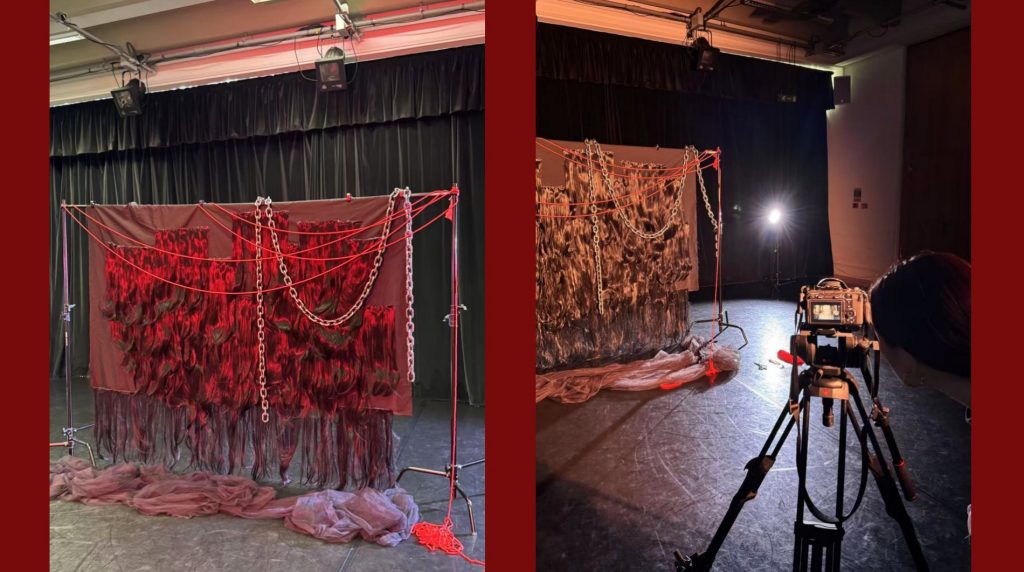
In testing the new installation, I designed an intervention process centered on interaction. The logic unfolds as follows:
Step 1: Conversation Introduction
I begin with a short conversation with the participants, guiding them to reflect on the relationship between hair, the body, and marriage. Hair is both part of the body and a cultural symbol often associated with femininity, beauty, and discipline. This topic helps participants quickly enter the context explored by the installation.
Step 2: First Reaction
Before any interaction, I invite participants to simply look at the installation and share their immediate, instinctive reactions. This step allows me to capture their spontaneous impressions without external influence.
Step 3: Free Action
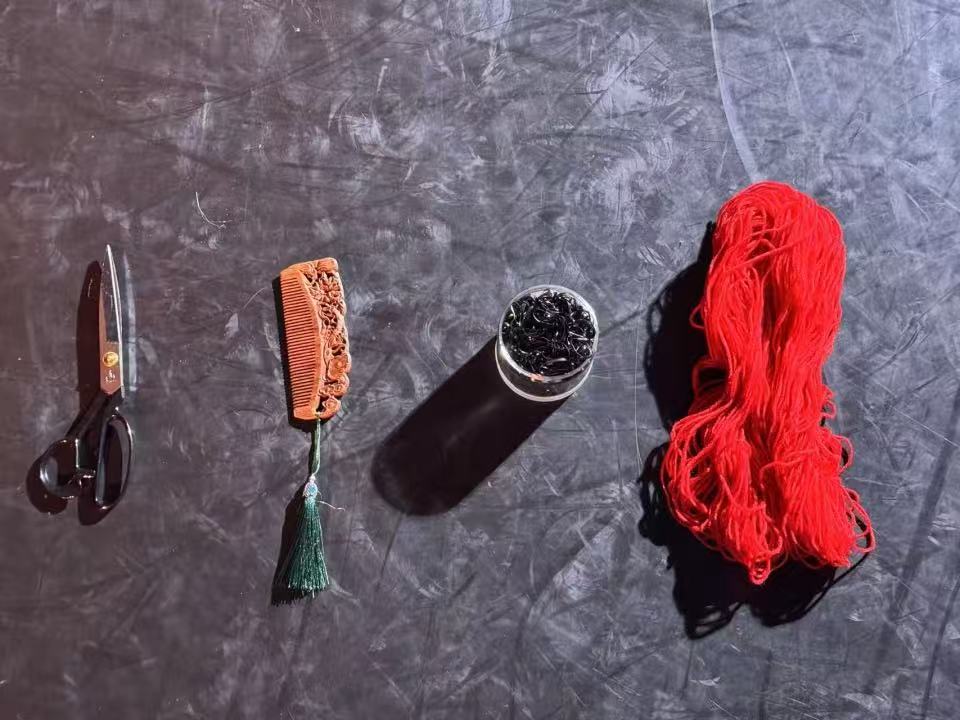
Next, I provide a set of tools—including scissors, combs, hair ties, and red strings—and tell them they may choose and use them freely. Whether they comb, braid, cut, tie, or entangle, each action is regarded as both a re-creation of the installation and a bodily response to the metaphor of marriage.
Step 4: Second Reflection
After the interaction, I ask participants again:
- “Why did you choose this action just now?”
- “Did this experience remind you of marriage or family?”
- “Compared to your first reaction, has anything changed?”
Through this sequence of seeing → acting → reflecting, I aim to observe whether participants undergo an emotional or cognitive shift in their engagement with the installation.
Leave a Reply