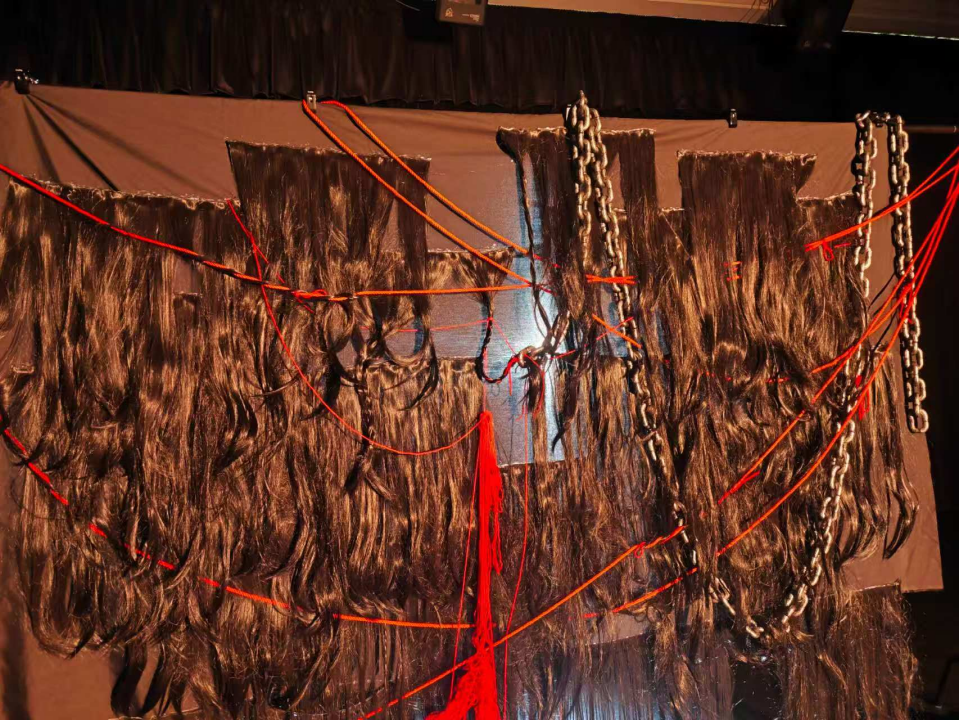
As my project has developed, the installation itself has undergone constant change. At first, I was mainly concerned with how materials could embody metaphors of marriage. But once more participants engaged with it, I realised that actions—what people actually did with the installation—became the true core of the work.
Instead of simply observing, participants engaged physically with the installation. Through gestures like braiding, cutting, and wrapping, they gave the work new layers of meaning.
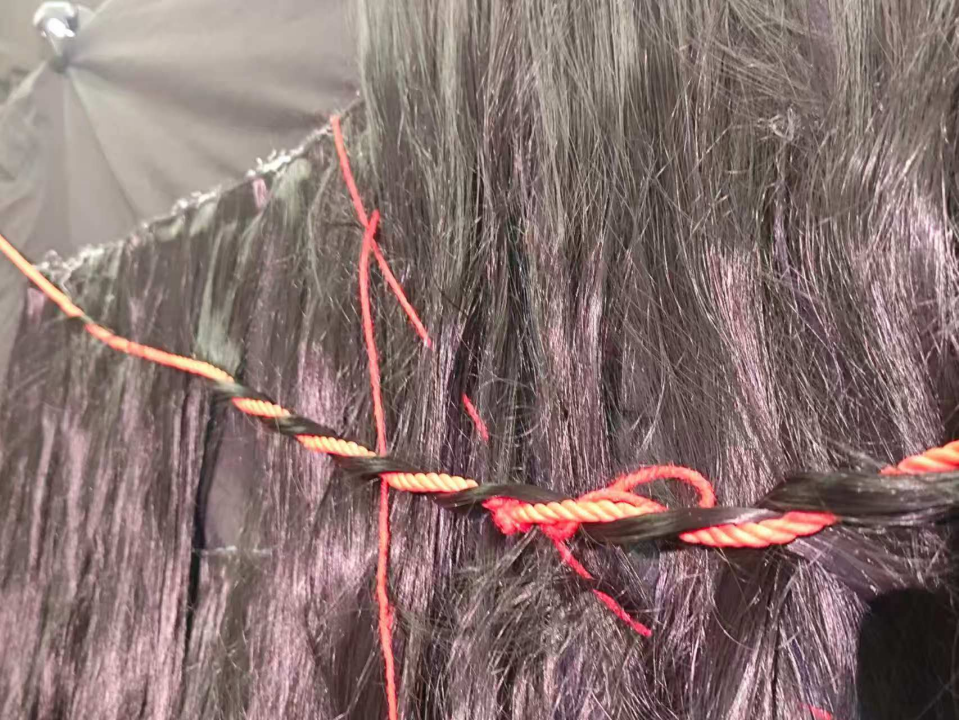
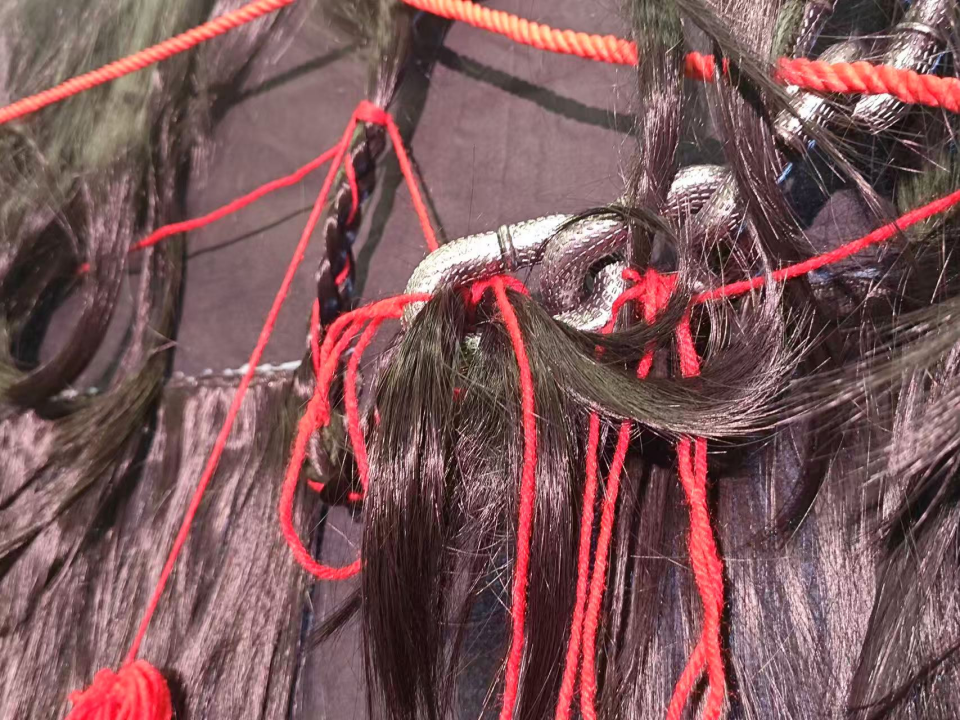
- Braiding: Some participants chose to braid hair or threads together. They described it as a reflection of how marriage ties two people together. The gesture carried tenderness, but also suggested a sense of binding.
- Cutting: Others decided to cut. Their movements were decisive, almost liberating. Cutting was often described as a release, as if they were severing invisible pressures.
- Wrapping: Some participants kept wrapping threads or strands around objects. This repetitive motion created a feeling of entanglement, evoking cycles of confinement within family or marital structures.
None of these gestures were imposed by me—they emerged spontaneously as participants responded to the installation. This spontaneity transformed the installation from a static object into a relational space, where meaning was produced through action.
I began to see that the installation’s value does not lie in how many metaphors I design in advance, but in how participants embody their own experiences and social imaginaries through movement. Their actions became a form of body language, materialising the pressures, contradictions, and desires surrounding marriage.
Leave a Reply