In my recent installation intervention, the feedback from two participants offered powerful insights into how bodily gestures can embody the tensions within marriage.
Participant One
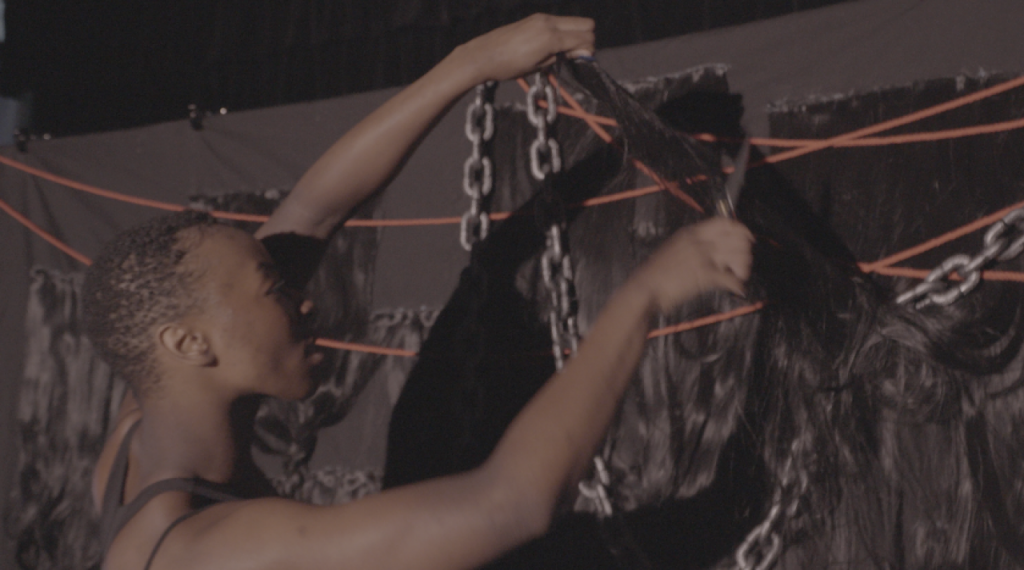
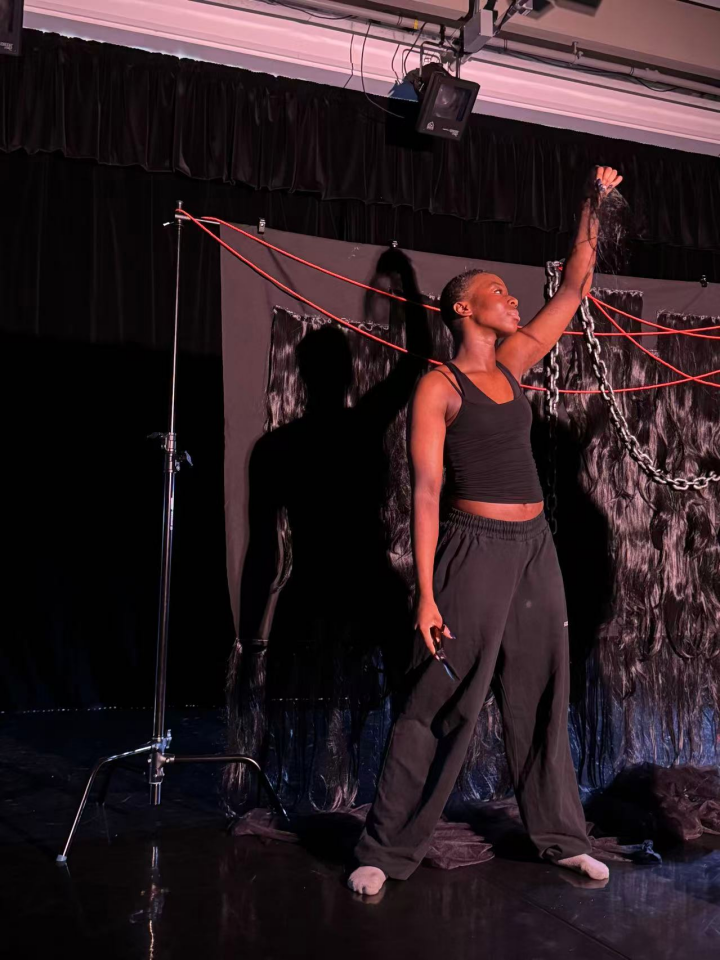
She chose to cut the hair. For her, this action created a sense of release. She explained: “When I cut the hair, it felt like I was cutting away some kind of pressure.”
This response reminded me of the contradictions many women face within family and marital expectations: they are often required to conform, yet they long for liberation. Cutting, usually a simple everyday act, became in this context a symbolic gesture of resistance and separation.

Participant Two
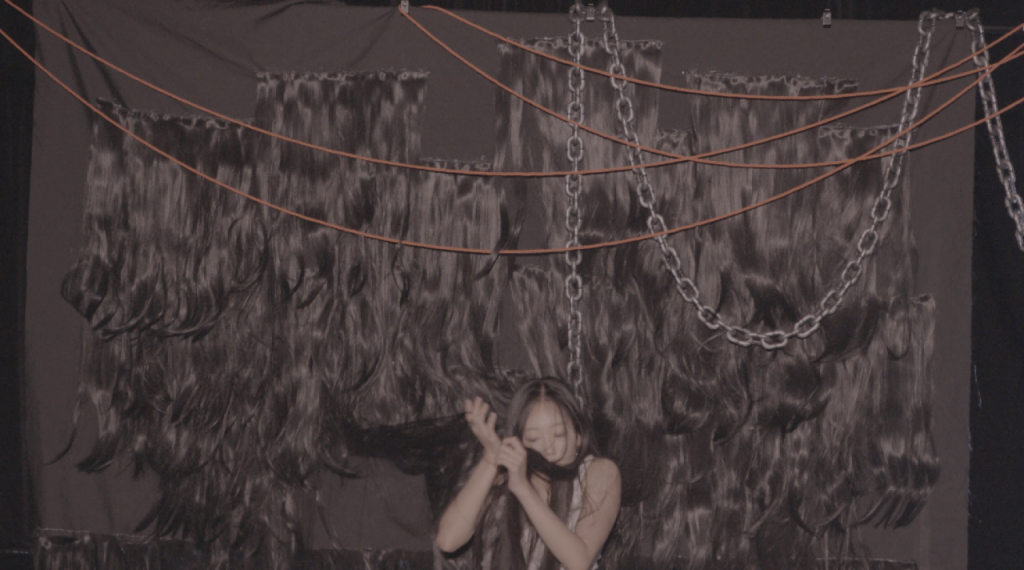
She chose to braid the hair. While braiding, she reflected: “It reminded me of how marriage ties people together.” Her tone carried both tenderness and resignation. For her, the braid symbolised connection but also constraint.
This reaction highlighted the duality of marriage as a structure: it can represent companionship and intimacy, but it can also imply restriction and sacrifice.

My Reflection
These two gestures—cutting and braiding—created a striking contrast:
- One expressed escape through release;
- The other embodied attachment through binding.
Together, they illustrated two extreme imaginaries of marriage: departure versus dependence. This helped me to see that the installation is not only a visual form, but a catalyst for participants to translate personal experiences into broader social metaphors.
For me, the most important discovery is that the meaning of the installation does not lie in what I predetermine, but in how participants invest their actions with personal and social significance. This openness is what gives the research its vitality.
Methodological Note: Why Gestures Matter
Using gestures such as cutting and braiding as part of the installation is not incidental. These acts are embodied metaphors: they materialise abstract ideas of connection, pressure, release, and confinement. In feminist and participatory art practices, bodily gestures often serve as a way to connect the intimate with the structural.
By allowing participants to enact these gestures themselves, the installation turns them into co-creators of meaning. Their physical actions become a form of visual analysis in motion, where art is not only observed but also performed.
Leave a Reply